
Classroom Resources
Northern Michif Resources
Meet the Northern Michif Learning Buddy!
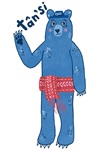
Northern Michif Learning Buddy
Workbooks (children)
|
|
|
|


Workbooks (youth)
Coming Soon . . .
Bingo
|
|
|
|
|
|
|


Games
|
|
|
|
|
|
|
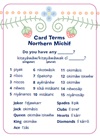
Terms for Playing Cards – (playing cards not included) |


Colouring
|
|
|
|
|
|



Labels
|
|
|
|
|
|




Miscellaneous
|
|
||

Click here to view a collection of Northern Michif books, developed by Erin Laliberte, Krissy Bouvier Lemaigre, and local language speakers from Île-à-la-Crosse.
About Northern Michif
Northern Michif is primarily spoken throughout North-Western Saskatchewan and parts of Northern Alberta. Notable communities in Saskatchewan include Green Lake, Meadow Lake, Beauval, Île-à-la-Crosse, and Buffalo Narrows. Many consider it a dialect of Cree, but with a noticeable French influence. Northern Michif is a historic language that holds stories and cultural teachings. It is likely that as Métis began moving north in greater numbers, they began to speak Cree to easily communicate with their First Nations kin and neighbours. Speakers say that the French vocabulary in Northern Michif was introduced by the clergy and school system, rather than coming from Michif French, and the Cree (Plains Cree Y-Dialect), came from First Nations neighbours. As missionaries and voyageurs followed the river systems from Red River to Northern Saskatchewan, Cree was the language they heard. It is through this connection to the land that Northern Michif gives identity to those who speak it, a connection to where they come from. In terms of a writing system, Northern Michif follows the Standard Roman Orthography (SRO). SRO is a system for writing the Cree language that uses a modified form of the Latin alphabet. It provides a consistent way to represent Cree sounds, assigning one letter to each distinct sound or phoneme.
| A special thanks to the Northern Michif contributors: |
| Vince Ahenakew |
| Sandra Laliberte |
| Leda Corrigal |
| Laura Burnouf |
| Maureen Belanger |
Elder Norman Fleury“We become who we are by listening and watching. We make la gaalet by the feel of our grandma’s fingers. There are no written recipes for food or life but there are moments and memories that form the basis for Métis identity.”
