Métis Veterans
Métis Veterans
Metis Veterans in Canadian History:
Métis servicemen and servicewomen have played an important role in every major conflict involving Canada, including the War of 1812, the 1885 Resistance, the First and Second World Wars, the Korean War, peacekeeping missions, and the war in Afghanistan. Historically, many enlisted for reasons including patriotism, economic opportunity, and the opportunity to use traditional skills such as hunting, trapping, scouting, guiding, and tracking.
For many Métis servicemen, these land-based skills made them highly valued in areas such as tracking, navigation, survival, and sharpshooting. Many of the Métis soldiers who served in the First and Second World Wars were descendants of those who fought alongside Louis Riel and Gabriel Dumont during the 1885 Resistance. Many were recognized for their skills, leadership, and contributions during military service.
During both World Wars, many Métis families lived in poverty on road allowance, which were undeveloped strips of government land where many Métis communities settled after being displaced from their traditional lands. For many, military service offered economic opportunities and a chance to build a better future with hopes of improved housing opportunities. Military service offered stable wages, travel, and the opportunity to support their families. For many Métis citizens, enlistment was also a pathway to respect and recognition.
Service, Opportunity, and Inequality:
Despite their contributions and sacrifices, Métis veterans were often not treated with the same recognition as other Canadian veterans. Historically, military records did not include a category for Métis identity, and soldiers were often classified as either Treaty Indians (First Nations) or by their European ancestry.
During and following military service, some Indigenous veterans faced pressure to enfranchise – a colonial policy that required First Nations individuals to give up their legal Indian status and treaty rights in exchange for citizenship and benefits. Some Métis veterans who self-identified as First Nations were deeply impacted by this colonial policy, as it could result in the loss of important legal rights, community connections, and ties to their cultural identity.
Following the Second World War, many non-Indigenous veterans received housing support, land grants, financial assistance, and education benefits through Veterans Affairs Canada. In contrast, many Métis veterans were denied access to those same supports. While some Métis veterans applied for land grants, much of the land was remote, poor-quality or difficult to sustain a livelihood. Many veterans returned to road allowance communities and continued to face poverty despite their military service and sacrifices.
Métis Servicewomen:
Métis women contributed significantly during times of war through nursing, wartime labour, fundraising, sewing, food preparation, and supporting their families and communities while loved ones were overseas.
Historical records show that Métis women enlisted during the Second World War. However, many enlistment records are incomplete or inaccurate due to the inability to self-identify as Métis within military documentation. Many Métis women also chose not to identify as Indigenous because of the racism and discrimination they feared facing, including concerns about being denied veterans’ benefits after seeing this happen to Métis servicemen.
Following their military service, Métis women faced injustices. A small number of Métis women received land through the Veteran’s Land Act. In some cases, this land was located near Métis communities and was land that had previously been taken from the Métis. Alongside the contradictions of receiving dispossessed land, women were required to prove they were single and had previous farming or agricultural experience, as the land had to be used for agricultural purposes. These patriarchal requirements created significant barriers and limited the number of Métis women who could access these benefits.
Despite these challenges, Métis servicewomen such as Corporal Bertha Clark-Jones, who later helped found what became the Native Women’s Association of Canada, and Private Teresa Dion, advocated for fair benefits, recognition of Indigenous veterans, and justice in many areas of Métis wellbeing. Through advocacy work, leadership, and involvement within their Métis communities, these women helped bring greater awareness to the experiences and contributions of Métis servicewomen.
Honouring Métis Veterans Today:
In recent decades, Métis organizations, historians, and veterans’ groups have worked to restore recognition to Métis veterans and ensure their stories are included in Canadian history and education. Within many Métis organizations and communities, the term “veteran” is also viewed broadly and inclusively, recognizing those who served in past armed conflicts, have completed military related training, and continue to serve their communities and country.
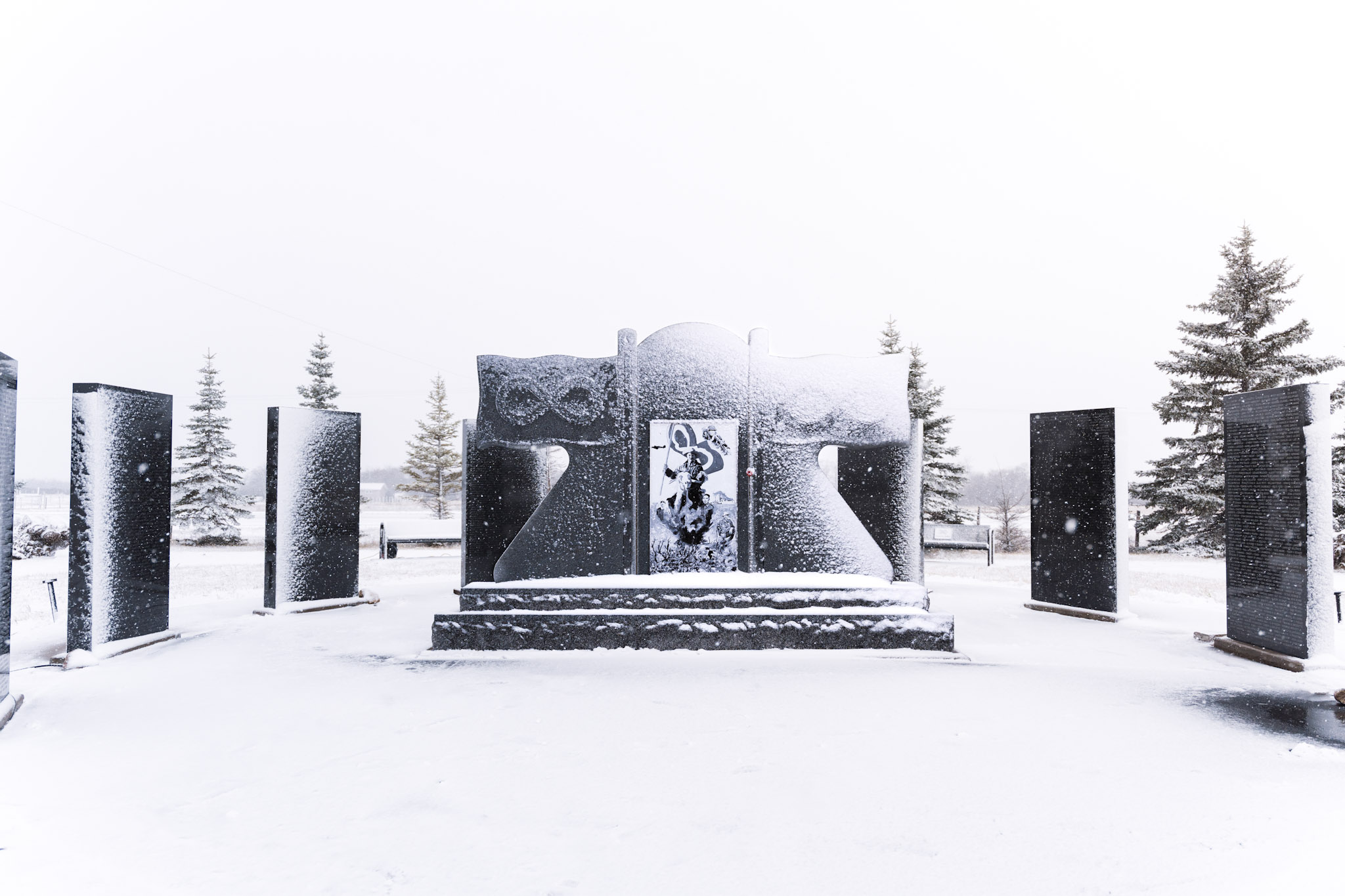
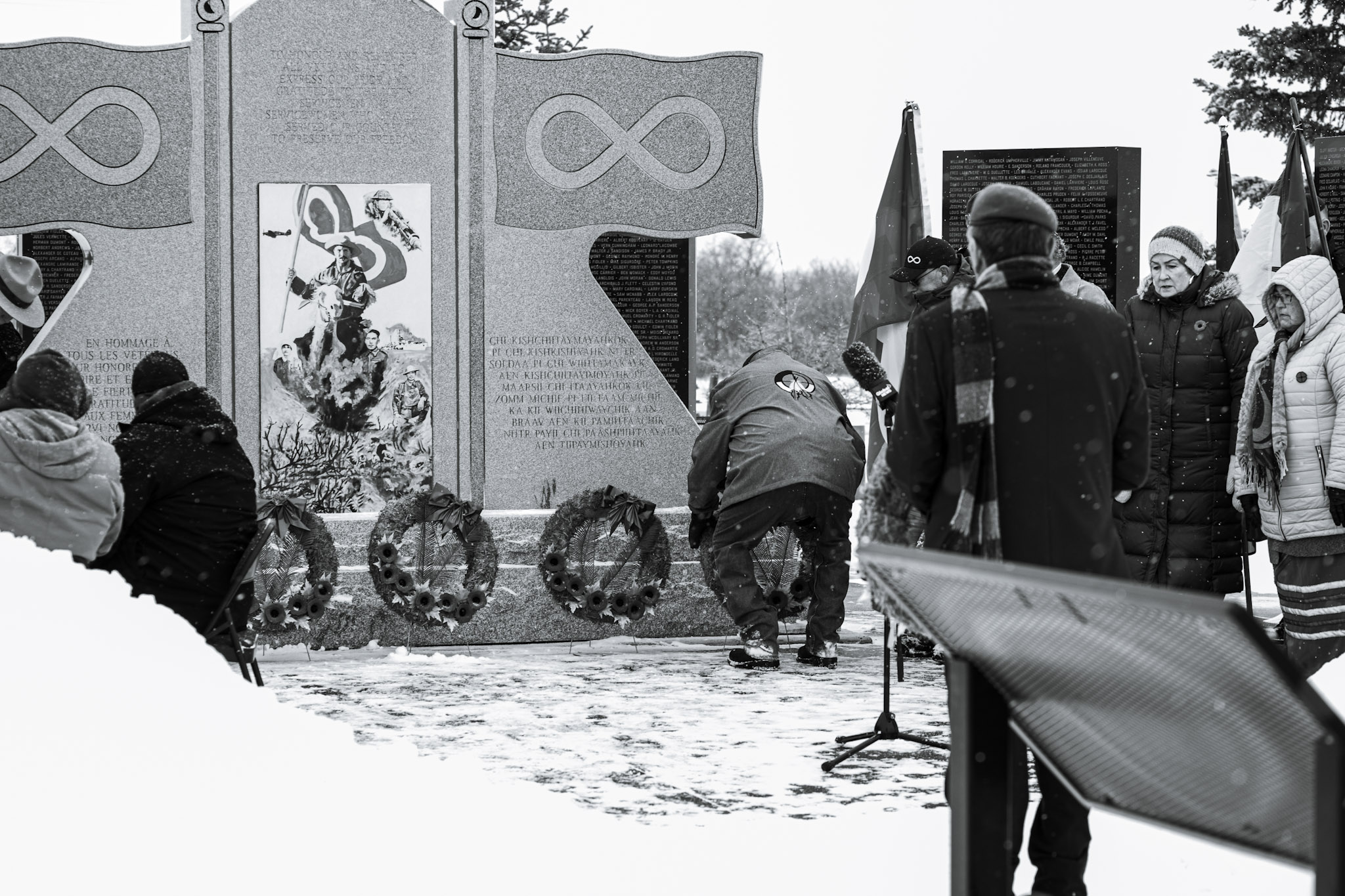
Today, Métis veterans are honoured through memorials, educational initiatives, and community recognition efforts across the Métis Homeland. One significant example is the National Métis Veterans Memorial Monument in Batoche, Saskatchewan. Created through partnerships across the Métis Nation, the monument recognizes the sacrifices and service of Métis veterans. More than 7,300 names of Métis servicemen and servicewomen are engraved on the monument, honouring those who served in the 1885 Resistance, the South African War, the First and Second World Wars, the Korean War, peacekeeping missions, and the war in Afghanistan. The veterans list continues to be updated through the Gabriel Dumont Institute Veterans Project as more information is shared, ensuring that recognition and respect for Métis veterans remains an ongoing community commitment.
Métis veterans are also honoured annually for National Indigenous Veterans Day on November 8, which recognizes First Nations, Métis, and Inuit veterans who served during wartime and peacekeeping missions. In recent years, Métis Nation–Saskatchewan has held ceremonies at the Batoche monument to recognize the sacrifices of Métis veterans, acknowledge the injustices many faced after returning home, and ensure their stories are not forgotten. Through remembrance, education, and recognition, Métis servicemen and servicewomen are honoured for their bravery, leadership, and resilience, as well as the sacrifices they made for their families, communities, and future generations.
Miwī Wihkats kawaniskisinaw – We shall never forget.
For access to recorded National Indigenous Veterans Day ceremonies at Batoche, and for more information please visit:
Veterans | Métis Nation Saskatchewan